
Dental Bridges in Abu Dhabi
A missing tooth is more than a gap in your smile. Over time, neighbouring teeth can drift, your bite can shift, and chewing or speaking can become uncomfortable. If you are looking for dental bridges in Abu Dhabi, Al Ameen Medicals offers a fixed, natural-looking way to replace one or more missing teeth and restore both appearance and function.
Our dentists begin with a careful examination, explain every option honestly, and design a bridge that fits your mouth, your bite and your budget. This page explains what a dental bridge is, who it suits, how treatment works, how long it lasts and what to ask before you decide. Ready to talk to a dentist? Book a consultation at Al Ameen Medicals to find out whether a dental bridge is the right solution for you.
Dental Bridges Explained
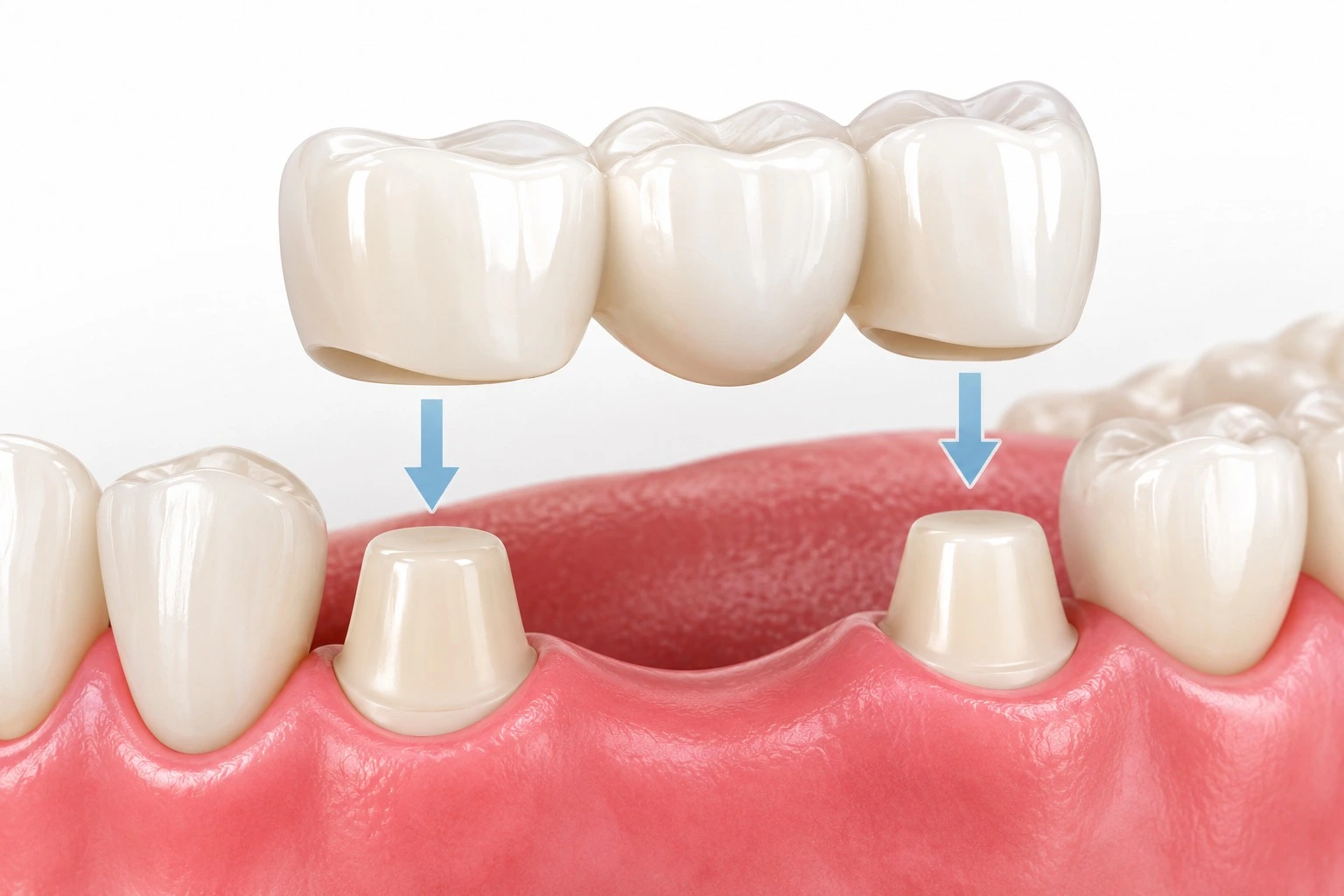
A dental bridge is a fixed restoration that fills the space left by one or more missing teeth. It is made up of:
- Pontic(s): the artificial tooth or teeth that fill the gap.
- Abutment teeth: the natural teeth (or implants) on either side of the gap that support the bridge.
- Crowns: caps placed over the abutment teeth to anchor the pontic securely.
Unlike removable dentures, a bridge is cemented in place and is not taken out at night. It is shaped and shaded to match your natural teeth.
Why Replace a Missing Tooth?
Leaving a gap untreated can lead to:
- Neighbouring teeth tilting or drifting into the space
- Opposing teeth over-erupting and changing your bite
- Difficulty chewing and uneven pressure on remaining teeth
- Changes in speech
- Food trapping, which raises the risk of decay and gum problems
- Gradual bone loss in the area of the missing tooth
- Reduced confidence when smiling
A dental bridge helps spread biting forces evenly and keeps your remaining teeth in a stable position.
Types of Dental Bridges We Offer in Abu Dhabi
The right bridge depends on where the gap is, the health of the surrounding teeth and your bite. Your dentist will recommend one of the following.
- Traditional Fixed Bridge
The most common type. Crowns on the teeth either side of the gap hold the pontic in place. It is strong and well suited to gaps where both neighbouring teeth are healthy enough to be crowned.
- Cantilever Bridge
Supported by a crown on only one side of the gap. It may be considered in selected cases, usually in areas of the mouth that take less biting force.
- Maryland (Resin-Bonded) Bridge
The pontic is attached with a metal or ceramic framework bonded to the backs of adjacent teeth. It preserves more natural tooth structure and is typically used for front teeth where biting forces are lighter.
- Implant Supported Bridge
Instead of relying on natural teeth, the bridge is anchored to dental implants. It is often chosen when several teeth are missing in a row, and it avoids reshaping healthy neighbouring teeth.
Bridge Materials: Which Is Right for You?
- Zirconia: Very strong and durable, with a natural look; widely used for back and front teeth
- All-ceramic / e.max: Excellent aesthetics and translucency; often favoured for front teeth
- Porcelain-fused-to-metal (PFM): Strong metal core with a porcelain surface; a long-established option
Your dentist will explain the advantages and limits of each material in relation to your bite, gum health and smile goals.
Is a Dental Bridge Right for Your Smile?
A bridge may be suitable if you:
- Have one or more missing teeth in a row
- Have healthy teeth and gums adjacent to the gap
- Have enough healthy tooth structure to support crowns
- Maintain good oral hygiene and attend regular check-ups
A bridge may not be the best choice if the neighbouring teeth are weak or heavily damaged, if you have untreated gum disease, or if several teeth are missing in different areas. In those cases your dentist may discuss dental implants or a partial denture instead. Treating gum disease or decay first is an important part of a successful result.
Dental Bridge Treatment at Al Ameen Medicals: Step by Step
- Consultation and examination: your dentist reviews your medical and dental history, examines your teeth and gums, and takes X-rays to check the bone and roots.
- Treatment planning: you discuss bridge type, materials, timeline and cost, and any treatment needed beforehand (for example, filling decay or treating gum disease).
- Tooth preparation: under local anaesthesia, the abutment teeth are gently reshaped so crowns can fit over them.
- Impressions or digital scan: a precise record of your teeth is sent to the dental laboratory so the bridge can be custom-made for fit, bite and shade.
- Temporary bridge: a temporary restoration protects the prepared teeth while the final bridge is made.
- Fitting and adjustment: the final bridge is checked for comfort, bite and appearance, adjusted if needed and then permanently cemented.
- Follow-up: a review visit confirms everything feels comfortable and healthy.
Most traditional bridges take about two to three weeks across two or more visits, depending on your case and laboratory time.
Benefits of Getting a Dental Bridge in Abu Dhabi
- Restores chewing ability and clear speech
- Natural-looking, colour-matched appearance
- Fixed in place: no removing or soaking, unlike dentures
- Helps keep neighbouring teeth from shifting
- Shorter treatment time than many implant pathways, with no surgery for a conventional bridge
- Improves confidence when you smile and talk.
How Long Do Dental Bridges Last?
With good care, a bridge commonly lasts between 5 and 15 years, and often longer. Lifespan depends on the material, your oral hygiene, the health of the supporting teeth and gums, habits such as teeth grinding or chewing hard objects, and regular dental check-ups.
How to care for your Dental Bridge
- Brush twice daily with fluoride toothpaste
- Clean under the pontic every day using a floss threader, interdental brush or water flosser
- Attend check-ups and professional cleanings regularly
- Avoid biting very hard items such as ice or hard sweets
- Tell your dentist if you grind your teeth; a night guard may protect the bridge
- Contact the clinic if the bridge feels loose, uncomfortable or changes your bite
Possible Risks and Limitations of Dental Bridge
Every dental treatment has considerations, and we believe in explaining them clearly:
- Healthy enamel on the abutment teeth must be reshaped for a traditional bridge.
- Decay or gum disease around the supporting teeth can compromise the bridge if hygiene is poor.
- Temporary sensitivity after tooth preparation is common and usually settles.
- A bridge may need repair or replacement over time.
- The bone beneath the pontic can gradually shrink, since it is no longer stimulated by a tooth root.
Your dentist will go through these points with you before treatment begins.
Dental Bridge Cost in Abu Dhabi
The cost of a dental bridge in Abu Dhabi depends on several factors:
- Number of missing teeth and number of units in the bridge
- Bridge type (traditional, cantilever, Maryland or implant-supported)
- Material chosen (zirconia, ceramic or PFM)
- Preparatory treatment needed, such as fillings, gum treatment or root canal treatment
- Dental insurance coverage, which varies between plans in the UAE
After your examination, our team provides a clear treatment plan and written estimate before any work starts, so there are no surprises. Please check your policy or ask our front desk team about what your insurance may cover.
Why Abu Dhabi Patients Trust Al Ameen Medicals
- Qualified dental professionals: Al Ameen Medical Centre has experienced dental professionals, including general dentists and a specialist endodontist, providing care across a range of dental needs.
- Years of healthcare experience: Established in 1984, Al Ameen Medical Centre has more than three decades of experience serving patients in Abu Dhabi.
- Honest, patient-first advice: Our dental team explains suitable treatment options, discusses alternatives where appropriate, and helps patients understand what their treatment involves before proceeding.
- Modern, hygienic care: Patients receive dental care in a professional clinical environment with a focus on safety, comfort, diagnosis and appropriate treatment planning.
- Quality dental care: The dental department provides comprehensive services, including crowns, endodontic treatment and cosmetic dental procedures.
- Clear communication: Our team focuses on straightforward consultations and personalised guidance so patients can make informed decisions about their dental treatment.
- Convenient Abu Dhabi location: The Abu Dhabi branch is located on Najda Street, Abu dhabi and Industrial Area, Musaffah.
- Accessible healthcare: Al Ameen Medical Centre also offers walk-in services and works with a range of major insurance providers, helping make healthcare more convenient for patients.
Replace Your Missing Teeth with Confidence
A well planned dental bridge can bring back your ability to chew comfortably, speak clearly and smile without hesitation. The best results come from an accurate diagnosis, honest advice and careful follow-up, and that is the approach our dentists take at Al Ameen Medicals.
If you are considering dental bridges in Abu Dhabi, book a consultation today. We will examine your teeth, explain your options and give you a clear plan and estimate. Book your appointment at Al Ameen Medicals: call, WhatsApp or request a visit online.
Frequently asked questions
1. Is getting a dental bridge painful?
The procedure is done under local anaesthesia, so you should not feel pain during treatment. Some sensitivity or soreness for a few days afterwards is normal and usually manageable.
2. How long does dental bridge treatment take?
A traditional bridge usually takes two to three weeks across at least two visits. Implant-supported bridges take longer because the implants need time to integrate with the bone.
3. Can I eat normally with a dental bridge?
Yes. Once the final bridge is fitted and any sensitivity settles, most people eat normally. Avoid very hard or sticky foods, especially while wearing the temporary bridge.
4. Is a dental bridge better than a dental implant?
Neither is always better. Bridges are quicker and avoid surgery, while implants do not involve reshaping neighbouring teeth and help preserve bone. Your dentist will recommend the best option after examining you.
5. How much does a dental bridge cost in Abu Dhabi?
Cost varies with the bridge type, material, number of teeth and any preparatory treatment. We provide a written estimate after your consultation.
6. Does insurance cover dental bridges in the UAE?
Some plans cover part of the cost, others exclude restorative work. Check your policy and ask our team, who can help you understand your coverage.
7. Can a dental bridge be removed?
A fixed bridge is cemented in place and can only be removed by a dentist, usually if it needs repair or replacement.
8. What happens if a dental bridge falls out or feels loose?
Keep the bridge safe, avoid chewing on that side and contact the clinic promptly. Do not attempt to re-cement it yourself.