
Dental Crown in Abu Dhabi
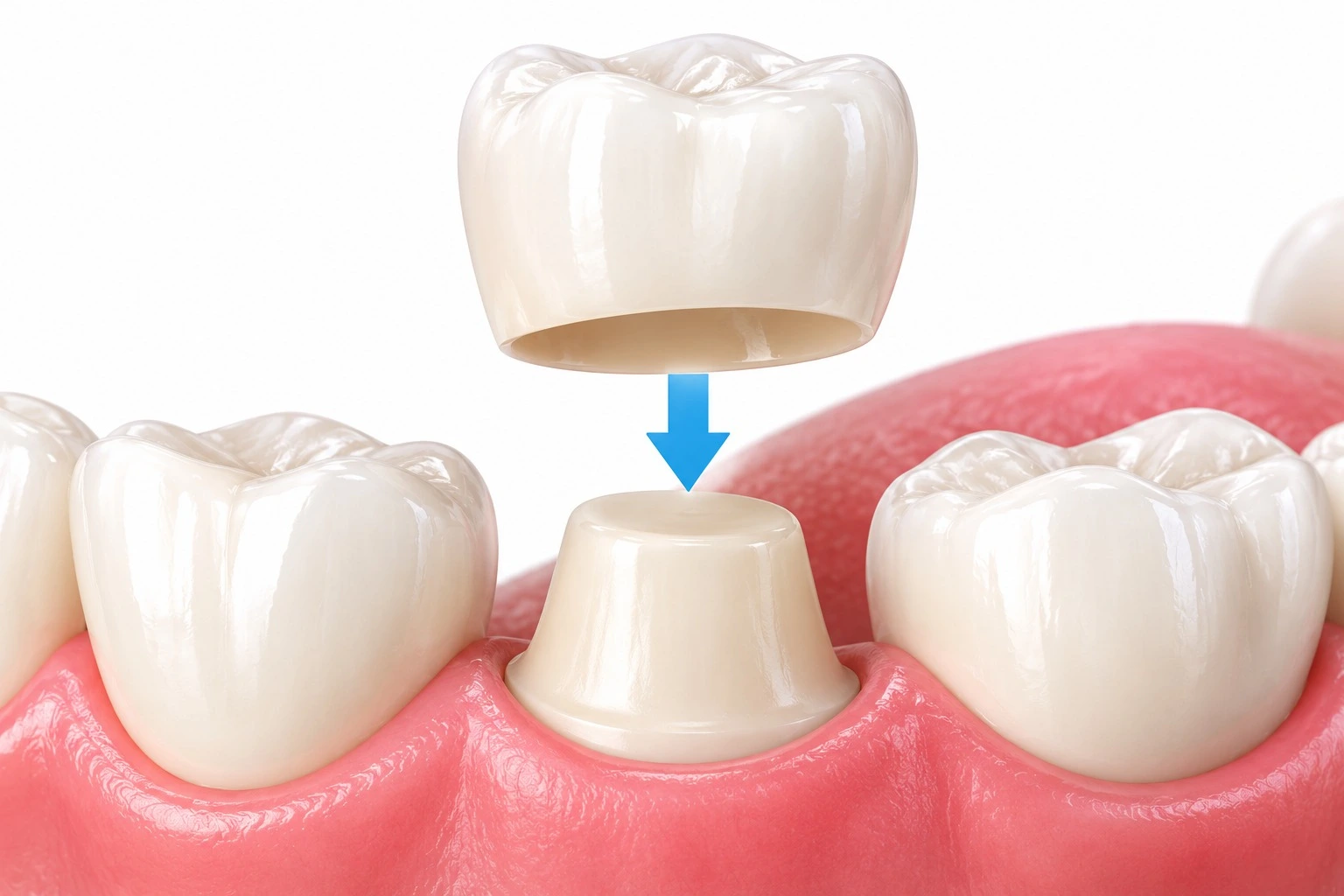
Don’t let a cracked or weak tooth get worse. At Al Ameen Medical & Dental Centre, our dentists restore damaged teeth with custom-made crowns that look natural, feel comfortable and are built to last.
From your first exam to the final fitting, you get a clear treatment plan, a written estimate before we start, and a dentist who explains every step. Visit us on Najda Street or in Mussafah, open every day.
- Typical visits: usually 2 – preparation, then fitting
- Comfort: Local anesthesia for tooth preparation
- Lifespan: Often 10 to 15 years with good care
- Materials: Zirconia, ceramic, porcelain-fused-to-metal, metal alloy
- Used for: Large cavities, cracks, worn teeth, after root canal treatment
What does a dental crown actually do?
A dental crown is a custom made cover that fits over the whole visible part of a tooth, from the gum line up. A filling repairs one spot. A crown surrounds the tooth, holds it together, shields it from further damage and brings back its shape, size and bite.
Your crown is made in a dental laboratory from impressions or digital scans, so it matches your bite, shade and neighboring teeth.
Is a crown the right fix for your tooth?
Your dentist may recommend a crown when you have:
- A large cavity with too little healthy tooth left to hold a filling
- A cracked or fractured tooth, to stop the crack spreading
- Root canal treatment, because treated teeth can become brittle
- Worn or eroded enamel, for example from teeth grinding (bruxism)
- A discolored or misshapen tooth that whitening or veneers cannot fix
- A dental bridge or implant that needs a crown to finish the restoration
Not every damaged tooth needs a crown. After an exam and X-ray, we explain whether a filling, onlay or veneer could work instead, so you only pay for treatment you need.
Choose your crown material
Your dentist recommends one after examining your tooth and bite.
- Zirconia: Tooth-colored and very strong. Suits back and front teeth, and patients who grind. Can look slightly more opaque.
- Porcelain/all-ceramic (E.max): The most natural, translucent look. Often chosen for front teeth. Can chip under heavy biting force.
- Porcelain-fused-to-metal: Tooth-colored surface over a metal core. Strong for back teeth. A thin metal line may show at the gum over time.
- Metal alloy: Excellent durability for molars and needs the least tooth removal. The metallic color is visible.
Your Two Visits for a Dental Crown in Abu Dhabi, Step by Step
Visit 1: Examination and preparation
- Consultation and X-ray
The dentist checks the tooth, roots and surrounding bone, then explains your options and costs. - Root canal treatment, if needed
If the nerve is infected or damaged, this comes first. Our dental team includes an endodontics specialist. - Numbing and shaping
With local anesthesia, the tooth is gently reshaped to make room for the crown. - Impression or digital scan
An accurate record of your tooth and bite goes to the dental laboratory. - Temporary crown
A temporary crown protects the tooth while your permanent one is made.
Visit 2: Fitting the permanent crown
- Check fit, color and bite
The temporary crown is removed and the new crown is tried in. We adjust it until it feels right. - Cementing and aftercare advice
The crown is permanently cemented and you leave with clear care instructions.
Dental Crown in Abu Dhabi: Benefits and honest limits
What a crown gives you
- Protects a weak or cracked tooth from breaking further
- Restores chewing strength and comfort
- Improves the shape, size and color of a tooth
- Often lets you keep your natural tooth instead of extracting it
What you should know first
- Sensitivity to hot or cold, especially in the first days
- Chipping of porcelain or ceramic with very hard foods or grinding
- A loose crown if the cement weakens or decay develops underneath
- Gum irritation if hygiene around the crown is poor
- Rare metal allergy with some crown types
- Irreversible tooth reduction. Part of your natural tooth is removed, so we recommend crowns only when they truly help
- Decay can still happen at the edge of the crown, so brushing and flossing still matter
Make your crown last
- Brush twice daily with fluoride toothpaste and clean between teeth every day
- Pay extra attention to the gum line around the crown
- Avoid ice, hard food items, pen caps and opening packets with your teeth
- Go easy on very sticky foods, especially with a temporary crown
- Ask about a night guard if you grind your teeth
- Keep regular check-ups and cleanings, typically every 6 months or as advised
Call us promptly if your crown comes off, feels high when you bite, or you have lasting pain or a bad taste. Seek urgent care for facial swelling or fever.
What a dental crown costs in Abu Dhabi?
The price depends on the material, whether you need a root canal, build-up or post first, how many teeth are treated, the complexity of your bite, and your insurance. You receive a clear written estimate before treatment starts.
We work with leading UAE insurers including Daman, Thiqa, ADNIC, AXA, Aetna, Sukoon, NextCare, MedNet and NAS. Crown cover differs between plans and may need approval, so bring your card and our team will help you check what is covered.
Why patients choose Al Ameen Medical & Dental Centre
- 42 years in Abu Dhabi: A long-established medical centre trusted by local families
- An experienced dental team: Dr. Bindu Annie Thomas (Specialist Endodontics), Dr. Safa Gafoor and Dr. Ambareesh Joshi (General Dentists). See Our Team
- Everything under one roof: crowns, root canal treatment, cosmetic dentistry and on-site X-ray imaging
- Long hours: every day, at two Abu Dhabi locations
- Plain-spoken advice: We explain every option, cost and risk before we start
Save your tooth before it needs more
A weak tooth rarely heals on its own. Cracks spread, decay goes deeper, and what could have been a crown can turn into a root canal or an extraction. A dental crown fitted early protects the tooth you have, restores comfortable chewing and, with good care, can last 10 years or more.
At Al Ameen Medical & Dental Centre, we examine your tooth, explain your options and give you a written estimate before treatment begins. If a crown is not the right answer for your tooth, we will tell you. Book your consultation today and take the first step toward a stronger, healthier smile.
Frequently asked questions
1. How long does a dental crown last?
With good hygiene and regular check-ups, often 10 to 15 years, sometimes longer. Material, bite, grinding habits and daily care all affect it.
2. Is getting a crown painful?
The tooth is numbed, so you should not feel pain during preparation. Mild sensitivity or gum soreness for a few days is common and usually settles.
3. How many visits does a crown need?
Traditional crowns usually need two: one for preparation and a temporary crown, and one to fit the permanent crown.
4. What is the difference between a crown and a filling?
A filling repairs a small area. A crown covers the whole visible tooth and is used when a large part is damaged or weak.
5. Which is best: zirconia, porcelain or metal?
There is no single best. Zirconia is very strong, all-ceramic looks the most natural on front teeth, and metal alloys are very durable on molars. Your dentist will advise.
6. Do I need a root canal before a crown?
Not always. Only if the nerve is infected or damaged. Teeth that have had root canal treatment often benefit from a crown for protection.
7. Can a crown fall off?
Occasionally, usually because of weakened cement, decay underneath or biting hard objects. Keep the crown and contact us promptly..
8. Will my insurance cover a crown?
Some plans cover part or all of it depending on the policy and medical need. We can help you check before treatment.
9. Are dental crowns safe?
Crowns are a well-established, widely used treatment. Small risks such as sensitivity or chipping exist, and your dentist will explain them.